
Weber County Scheduled vs Actual Release
A scheduled or projected release date is a forward-looking date drawn from the current sentence, credits, and controlling order. It can guide planning, but it does not prove that the person has left custody. An actual release date is the recorded physical exit. Even then, the destination matters. A transfer to Utah corrections, another jail, federal custody, immigration custody, or a hospital is not a release to the community.
Pretrial detention works differently. A person awaiting trial has no sentence-completion date. Release may depend on bail, an own-recognizance order, dismissal, or another court action, and a hold from a different case or agency may still prevent exit. Weber County's current roster shows a custody snapshot but has no projected date, released-status field, or release archive. Use the court docket and the sheriff's admission/release record for that episode.
For a sentenced person, first decide whether the sentence is a county jail commitment or a Utah prison term. Those two systems use different statutes, decision makers, and credit rules. A state prisoner housed for a time in Weber County still follows the UDC and Board release path. Physical location does not turn that prison sentence into county time.
Find a Weber County Release Date
Begin with the signed judgment and the agency holding the person. The judgment supplies the imposed term, the type of sentence, and any judicial credit for time already served. The custodian supplies current calculations, holds, and the final physical release record. If the case is a Utah prison sentence, the Board order is also essential because Utah generally uses indeterminate sentencing and does not reduce every case to one fixed percentage.
- Identify the booking or offender with full name, date of birth when lawfully known, booking number, offender number, and case number.
- Read the court judgment. Separate a county jail commitment from a state prison sentence and note credit already awarded by the judge.
- For county time, ask Weber jail records about the recorded sentence calculation, awarded good time, active holds, and the record that will show release.
- For state time, search UDC and then find the person's Board hearing and decision. Copy each date label exactly as displayed.
- Check later court, Board, and custody events for a warrant, detainer, rescission, new sentence, or transfer that may change the date.
- Confirm the actual exit through the jail or UDC record and use VINE only as an added custody-change signal.
The Weber County release search and records overview provides the broader route for a person who has already left the roster. For a date inquiry, keep each episode separate. The same name can have more than one booking, case, sentence, or release.
Note: Copy the source's own date label because order, parole, processing, and physical-exit dates describe different events.
Weber County UDC Release Lookup
The Utah Department of Corrections Offender Search covers people who are currently incarcerated or under UDC probation or parole supervision. It is not a Weber County arrest archive. Search by the available name or offender-number fields, compare identifiers, and open the individual record. Record the current status, location or supervision wording, and each date under the exact label shown.
The official UDC search interface illustrates the statewide route for a Weber County person serving a Utah sentence:
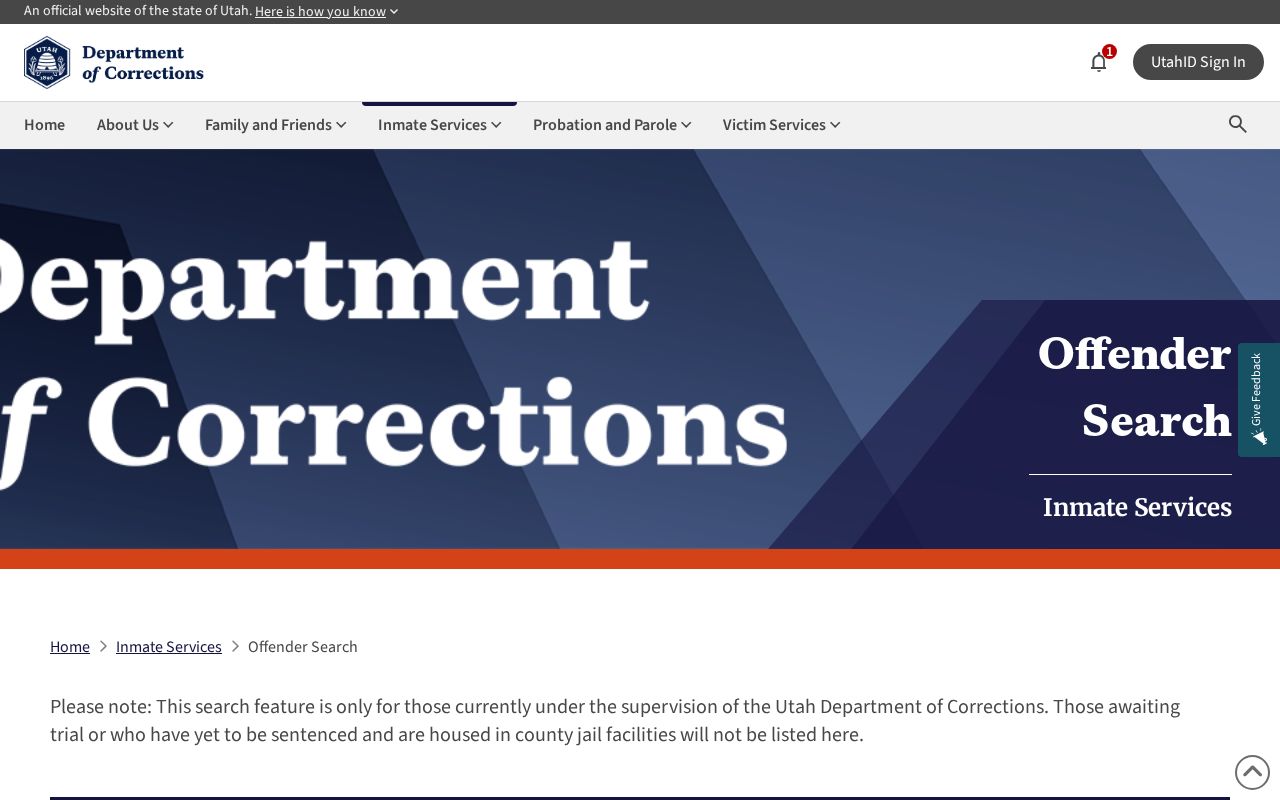
The image also supports a key limit. UDC does not promise that every public record contains a field literally called “Projected Release Date” or “Tentative Release Date.” Availability and wording can vary by case. A physically released parole client may remain listed because state supervision continues. After complete discharge, the public search may no longer return the person, so UDC records and Board orders become the historical route.
A displayed future parole or release date is still not proof of physical exit. It reflects the current state record and may rest on a Board order with contingencies. Search the Board's decision tool and inspect later actions before treating that date as final.
Weber County Good-Time Date Rules
Weber County calls its county jail good-time policy “10 for 30.” The statutory base is Utah Code Section 76-3-403. A custodial authority may, in its discretion, allow up to ten days of credit for each thirty days served. For a term under thirty days, the statute allows up to two days for each ten days, subject to its limits. “May” matters. This is not automatic credit in every case.
The WCSO Corrections FAQ says good time may recognize institutional behavior, program participation, work, or other commendable conduct. A judge can award other good time. If the judge does not do so, the person must request statutory good time from the jail, which may grant it in its discretion. Weber also identifies exclusions when the judge orders no good time or when the person is under UDC/Board or United States jurisdiction.
A sound county estimate starts with the signed judgment, the imposed jail term, and credit for time already served. Next, determine whether the statute applies, whether the court barred or granted credit, and whether Weber actually awarded discretionary credit. Then check all other cases, holds, warrants, and transfer orders. The calculation remains an estimate until the sheriff records the exit.
- Time-served credit
- Credit the sentencing judge applies for qualifying time already spent in custody.
- Good time
- A possible reduction tied to statute, court action, and jail discretion in a county commitment.
- Detainer
- A request or hold from another authority that may prevent community release when one matter ends.
- Discharge
- The formal end of the sentence or supervision, distinct from release on parole.
Weber County State Release Dates
A Weber County resident serving a Utah prison sentence follows state rules even if the person was once housed in a county contract bed. Utah generally uses indeterminate sentencing. Under Section 77-18-111, the sentencing court is limited in fixing a definite prison term. The Board exercises parole authority under Section 77-27-9, subject to minimum terms and offense-specific rules.
There is no verified blanket Utah rule that each state prisoner must serve 85 percent of the sentence. That shorthand should not be imported into a Weber County date. Mandatory minimums, life without parole, offense-date rules, and the actual judgment must be checked case by case. Eligibility means the Board can consider release. It does not create a right to leave on the first eligible date.
Utah's earned-time program appears in Section 77-27-5.4. Successful completion of approved case-action-plan programs supplies at least four months of credit for each of up to two programs, and the Board has limited added discretion. The statute also has exclusions. They include cases without a current release date, certain life or expiration decisions, insufficient transition time, unmet release contingencies, and other listed circumstances. Credit may be forfeited when a rescission hearing becomes necessary.
That framework is not the Weber jail's “10 for 30” rule. County good time concerns a county commitment and sheriff discretion. State earned time operates through UDC programming and Board action. Combining the two can produce a false date.
Note: County good time and state earned time use different laws, records, and decision makers despite their similar names.
Why Weber County Release Dates Change
A projected date reflects facts known at one point. Later legal or custody events can move it, remove it, or change the destination. The strongest check is chronological: read the newest court order, the newest Board decision, and the current custodian record. Do not let an older search capture override a later official action.
| Factor | Possible effect | Record to check |
|---|---|---|
| County good-time award or loss | Changes a county sentence estimate within the lawful limits | Judgment and Weber jail calculation |
| State earned-time action | May advance a Board-controlled date when statutory terms are met | UDC and Board records |
| Hold, warrant, or detainer | May block community release or cause a handoff to another authority | Jail record, court docket, and destination field |
| Rehearing or paper review | Allows the Board to consider new or updated information | Board hearing and decision search |
| Rescission | Can remove a future parole date after a new issue | Board rescission decision |
| New sentence or court order | Can add time, grant release, or alter credit | Signed order and chronological docket |
| Release contingency | An unmet plan or condition can delay the planned date | Board order and UDC status |
Movement alone can also create a false impression. Weber County Correctional Facility holds county defendants as well as some state, U.S. Marshal, ICE, and AP&P populations. Leaving the Weber roster can mean transport rather than freedom. The release or movement record should name the receiving authority when that field is public.
Weber County Board Date Decisions
The Utah Board hearing and decision search accepts names, offender numbers, and date ranges. An original hearing considers whether and when parole may occur. Rehearings revisit the matter later, while paper reviews consider added information. Redeterminations apply in limited long-date cases. A rescission hearing can take away a date already granted.
A hearing date is not a release date, and the Board does not always decide on hearing day. Official materials state that decisions often post weeks later. Read the actual order for a parole date, rehearing, rescission, sentence expiration, or termination. Then compare the order with UDC status and release-day instructions.
UDC's Release Day guidance describes the operational side of many Utah releases:
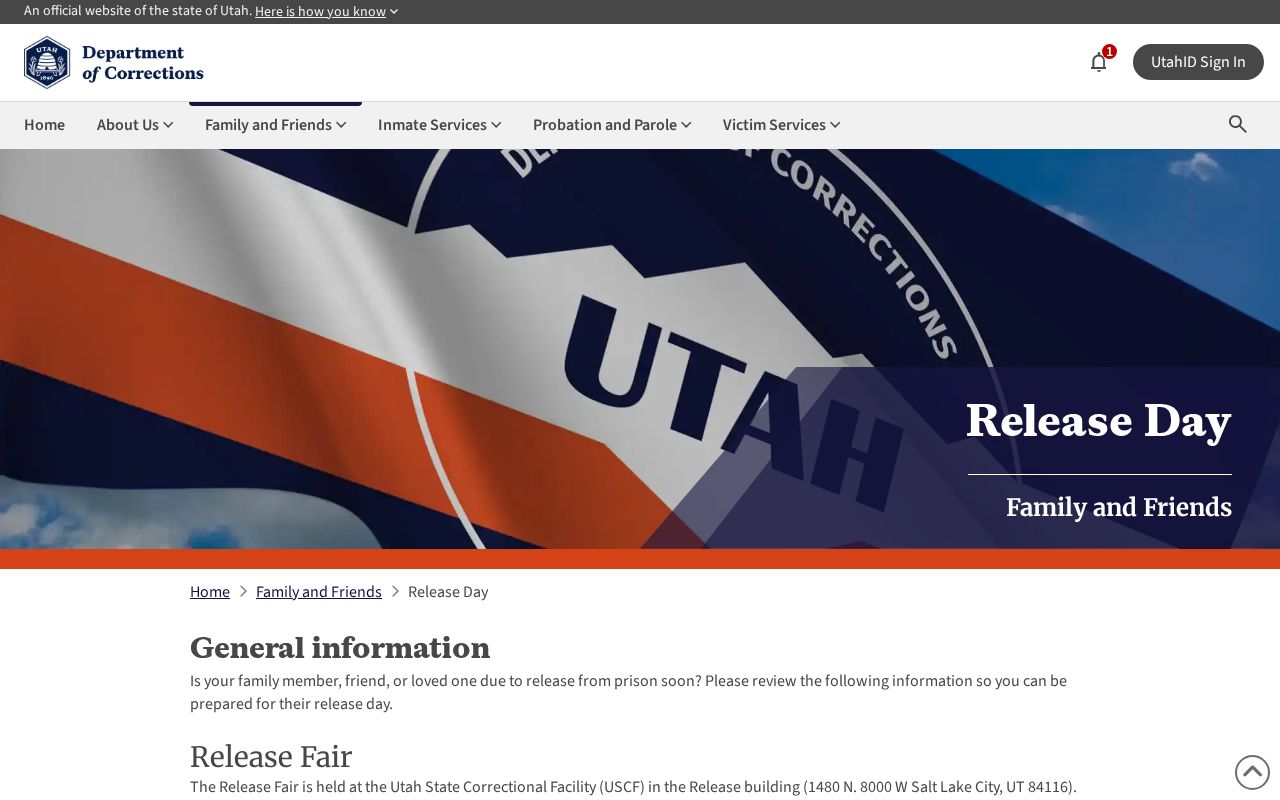
The capture shows why an ordered date and pickup plan must be read together. Most UDC paroles and releases are processed on Tuesdays at the Utah State Correctional Facility. That commonly includes UDC clients held in county jails. Rare direct county-jail exceptions are communicated to the family. The operational rule does not replace the individual Board order or UDC record.
Note: Tuesday processing is a statewide operational norm, not a promise that every Weber County state release occurs that day.
Weber County Weekend Release Dates
No official Weber County rule was found that automatically moves a county sentence ending on a weekend or holiday back to Friday. Do not adjust the date based on that assumption. The sheriff's published statement says completed-sentence release processing normally begins around 9 a.m. on the date time is served. It gives a process start, not a guaranteed exit time.
Calendar questions should go to the custodian with the signed judgment and case number in hand. Ask how the recorded term, time-served credit, any good-time award, and the actual calendar date are being applied. Other cases or holds may remain even when one term expires. If the date is unusual, request the individual release entry afterward instead of relying on a general rule that Weber County does not publish.
This local gap is part of the distinctive “10 for 30” issue. The county policy is discretionary, and state-prison dates belong to the Board. Neither system supports a simple public calculator. A careful answer identifies the system, applies only its own rules, and preserves any uncertainty until the custodian records the event.
Confirm a Weber County Release Date
Use a positive event record to confirm the date. For a county sentence, request the Weber County Sheriff's admission/release entry with the person's identifiers, booking period, release date and time, release type or authority, and destination if the person transferred. A court order can explain why release should occur, but the sheriff's timestamp shows when processing ended. The current roster cannot supply that historical field.
For a state prisoner, compare the Board order, UDC status, and the updated custody record. Utah VINE can add notice of release, transfer, escape, return, death, or a coming parole date. It should not stand alone. The Weber County VINELink release check explains how to track one person and register for a notice.
Keep transfer and discharge separate. A transfer means custody moved. Parole means the person left prison but remains under sentence supervision. Discharge means that sentence or supervision ended. Those labels answer different questions, and each may occur on a different date.